










Parker authorised distributor
Industry

Food and Beverage

In the food industry, where compressed air comes into contact with the product, it must be strictly sterile. In packaged food, MAP extends shelf life without any additives.

MAP packaging · nitrogen blanketing · beverage CO₂ · sterile air

(0216) 549 26 80WhatsApp

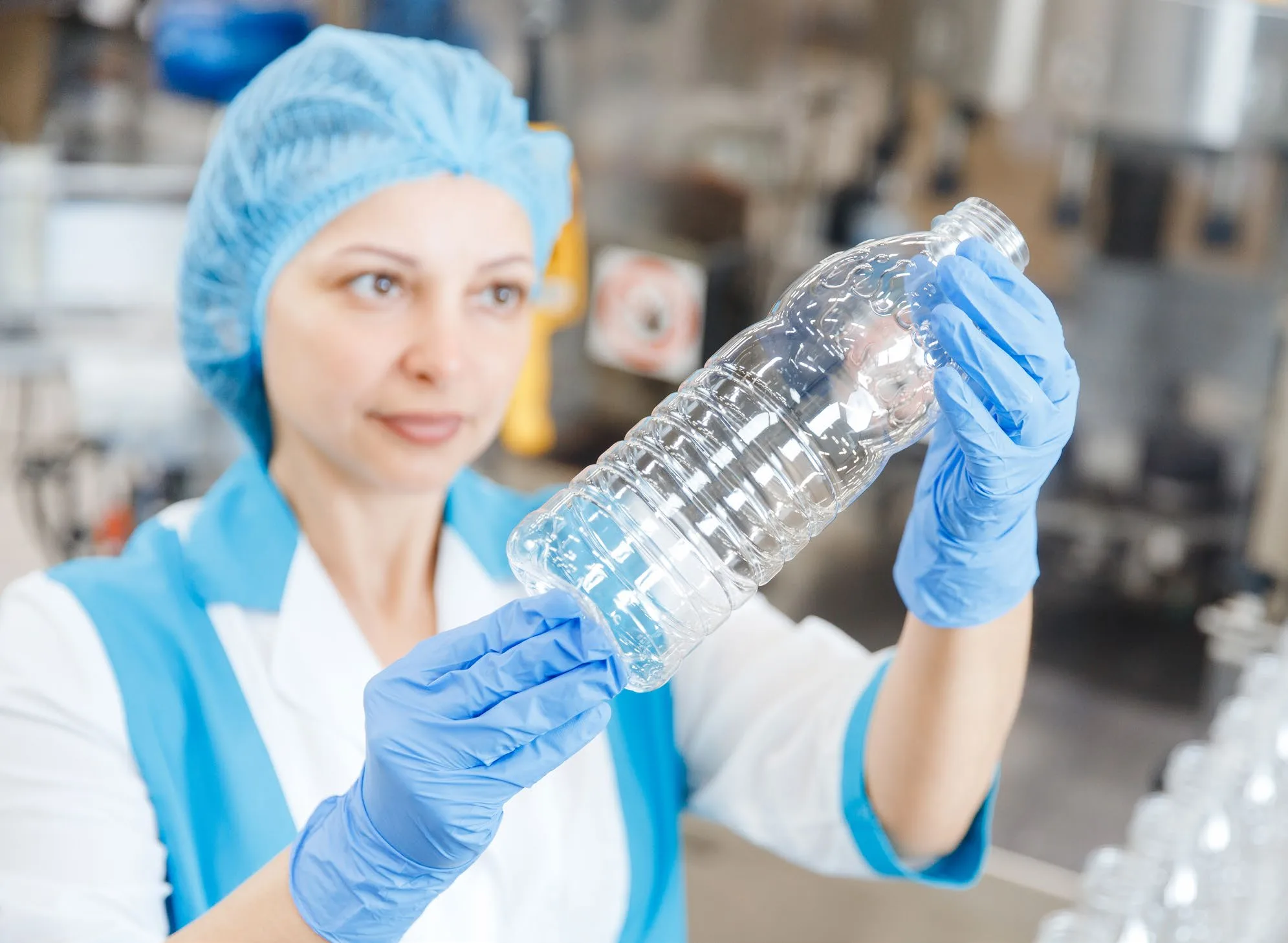
Quality control worker in a cap and gloves inspecting a PET bottle
Belliss Morcom · PET bottle production
Air in contact with the product
Class 1.2.1
ISO 8573-1 · minimum at HACCP critical control points
Sterile filtration
0.2µm
Membrane filter, 100% retention of microbiological load
Beverage CO₂ quality
ISBT
Quality guidelines; PCO₂ protects up to 10 times the permitted levels
MAP gas mixture
50–80%N₂
Balance CO₂ (50–20%); depends on the product
Industry constraints

Hygiene, purity class and continuity.

In industrial food production, compressed air has become indispensable with advances in technology and automation; the bacterial contamination it carries (mould, yeast, bacteria, spores, viruses, etc.) can threaten product quality.

  1. 01

    Hygiene

    In the food industry, where compressed air comes into contact with the product, the air must be strictly sterile. Sterile filters should therefore be used at the last points before the application.

    Gas cylinders delivered on open trucks and mostly stored outdoors can also compromise hygiene when they enter packaging areas without being disinfected.

  2. 02

    Purity class

    HACCP divides the air quality required for food applications into three; points where compressed air comes into direct contact with products, or may do so, are critical control points. According to ISO 8573-1 and HACCP, compressed air in contact with the product must be brought to at least Class 1.2.1.

    Quality management systems such as GMP, BRC, FDA, HACCP and ISO 22000 require compressed air to be sampled at regular intervals to control production quality.

  3. 03

    Continuity

    With cylinder supply, a cylinder running out during the process causes production losses.

    With on-site generation running 24/7 without interruption, there are no stoppages or production losses caused by running out of nitrogen.

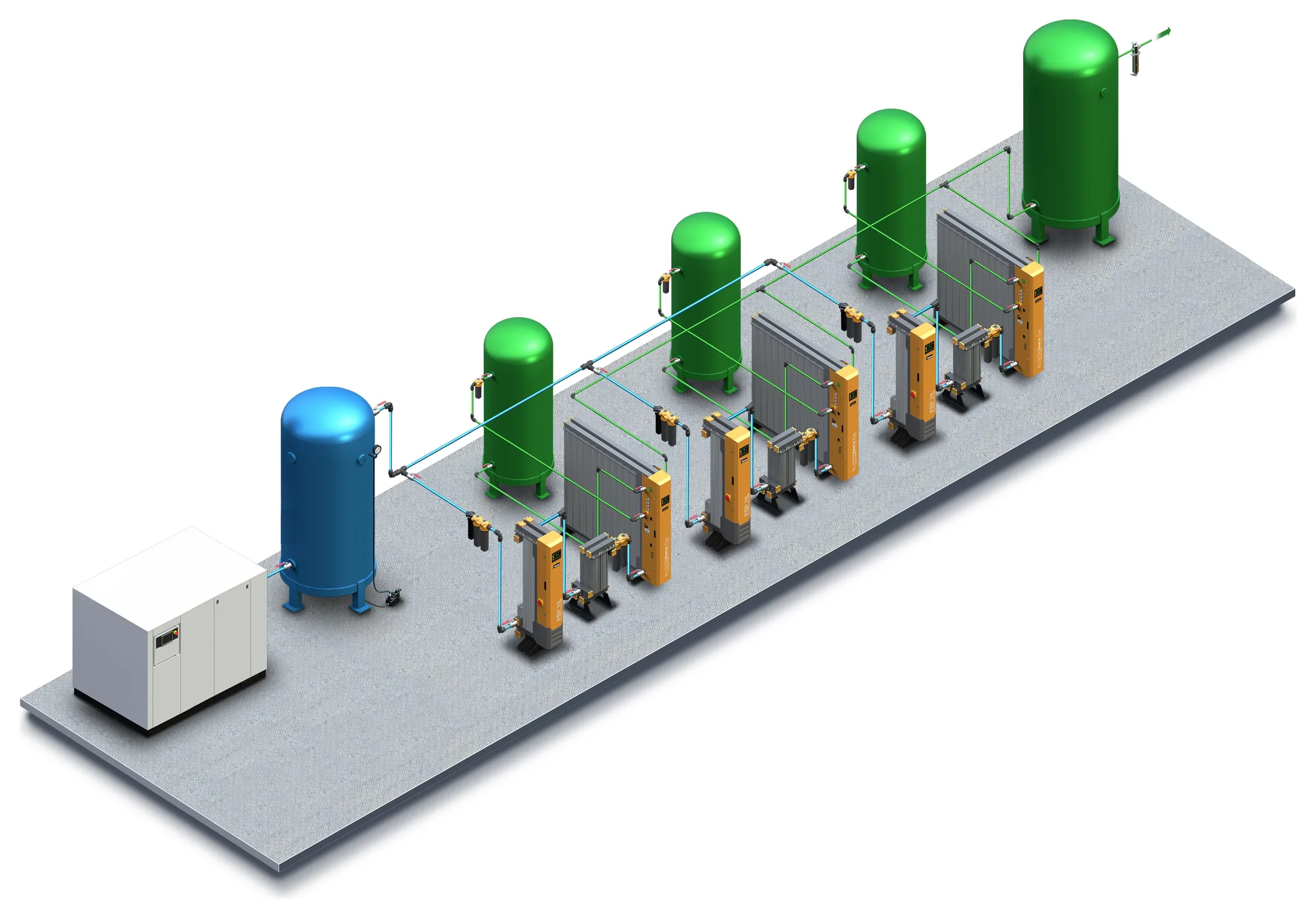
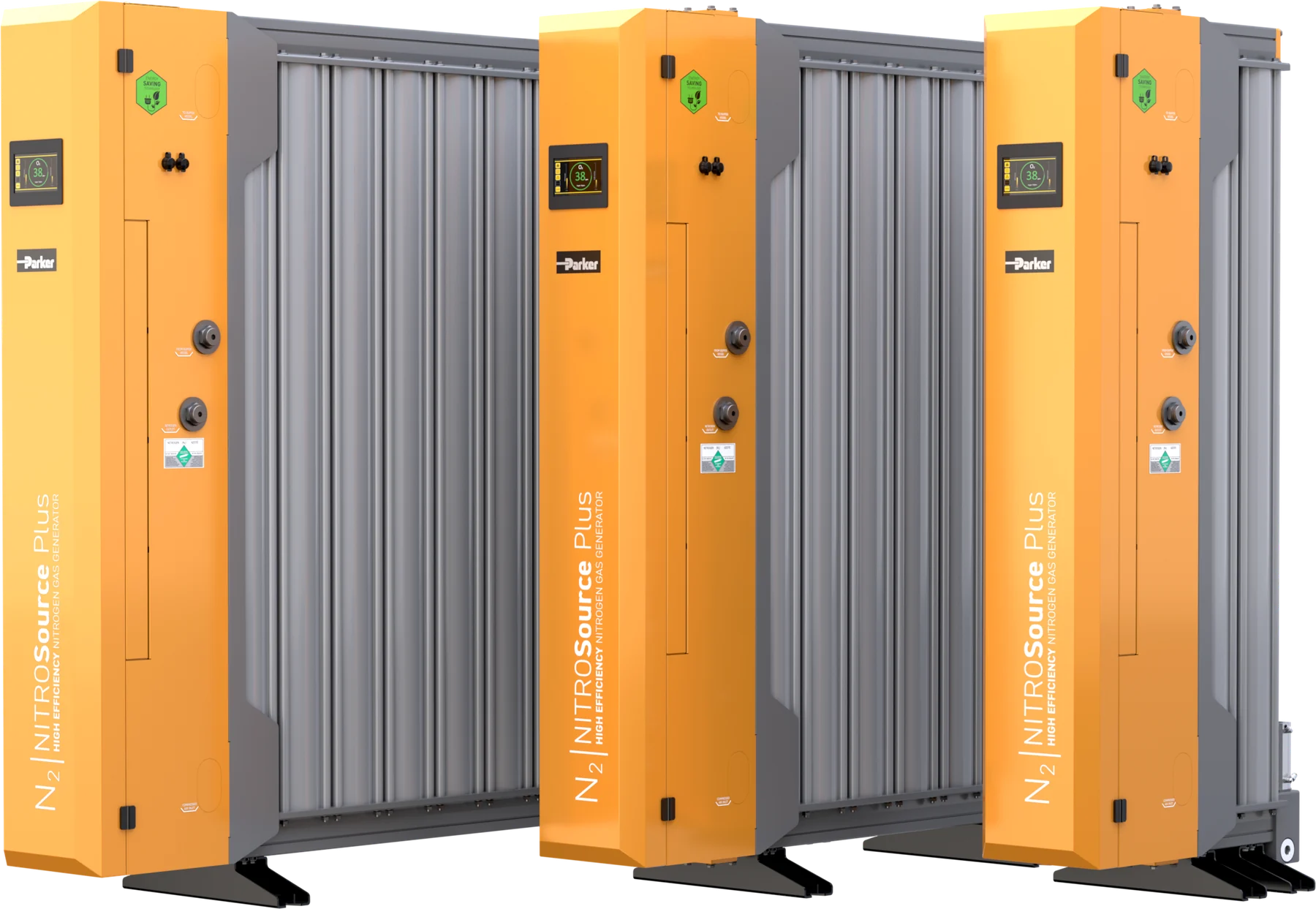
Layout of an on-site nitrogen generation system with three NITROSource Plus nitrogen generators, a dryer, filters and tanks
Parker NITROSource Plus · on-site nitrogen generation
Your benefits

On-site generation, mixing at the machine.

  1. 01

    No stoppages from empty cylinders

    The generator runs 24/7; production losses from cylinders running out during packaging disappear.

  2. 02

    Hidden supply costs disappear

    Rental, transport, membership and service fees, unusable gas returned in cylinders, and forklift and operator costs for changing cylinders and manifolds.

  3. 03

    A safer workplace

    Cylinders delivered full at pressures of 120 to 230 bar pose serious safety risks; the generator produces nitrogen at low pressure.

  4. 04

    Mixing ratio at the machine

    With gas mixers, different mixtures can be produced on different packaging machines at the same time, without buying separate cylinders for each product.

  5. 05

    No mixture separation

    In mixture cylinders the density difference between gases causes separation; especially in winter the heavier carbon dioxide cannot be delivered to the pack in the required ratio.

  6. 06

    Lower carbon emissions

    Prevents the environmental and air pollution caused by delivery vehicles for liquid and cylinder nitrogen supply.

In numbers

90%up to
Cost savings
12–24months
Payback period
4×up to
Shelf life with MAP

Savings and payback: calculated in comparison with cylinder or liquid nitrogen supply. Shelf life: for products packed with a mixture of 50–80% nitrogen and 50–20% carbon dioxide. Varies by plant.

Applications in the industry

Four applications in food and beverage.

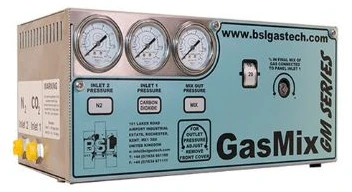
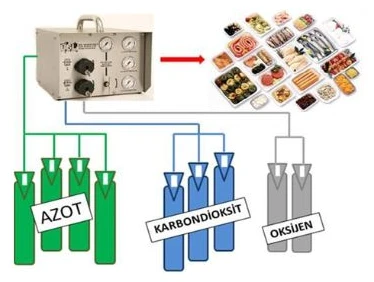
Gas mixer diagram: from nitrogen, carbon dioxide and oxygen cylinders to packaged food
Mixing with a gas mixer
01

Modified atmosphere packaging (MAP)

For products that offer a good medium for bacterial growth or contain a lot of moisture, such as sliced cheese, filo pastry, grated mozzarella or sausages, vacuum packing alone is not enough. In MAP, the headspace in the pack is filled with gas mixtures, also called food gases.

High-purity, food-grade nitrogen from Parker PSA nitrogen generators is mixed in the required ratios with carbon dioxide fed to the gas mixer from a separate source.

Gas mixture
50–80% N₂ · 50–20% CO₂
Shelf life
Up to 4×
On-site generation
From 1 cylinder a day upwards

Products usedNitrogen generatorsGas mixers

Olive oil in a glass bottle
Representative image
02

Nitrogen blanketing in tanks

When storing sunflower oil, olive oil and refined oilseeds, tank breathing increases acidity and peroxide formation spoils oil quality. In fermented drinks, oxygen lets fermentation continue uncontrolled; in dairy products it can quickly trigger aerobic growth.

In this method, known as blanketing or padding, nitrogen is fed into the tank headspace under pressure control. The headspace is also filled with nitrogen when transferring syrups, flavours and extracts between processes.

Nitrogen purity · vegetable oil
99% and above
Applied to
Tank headspace
Liquids
Oil, milk, ayran, wine, fruit juice, syrup

Products usedNitrogen generators

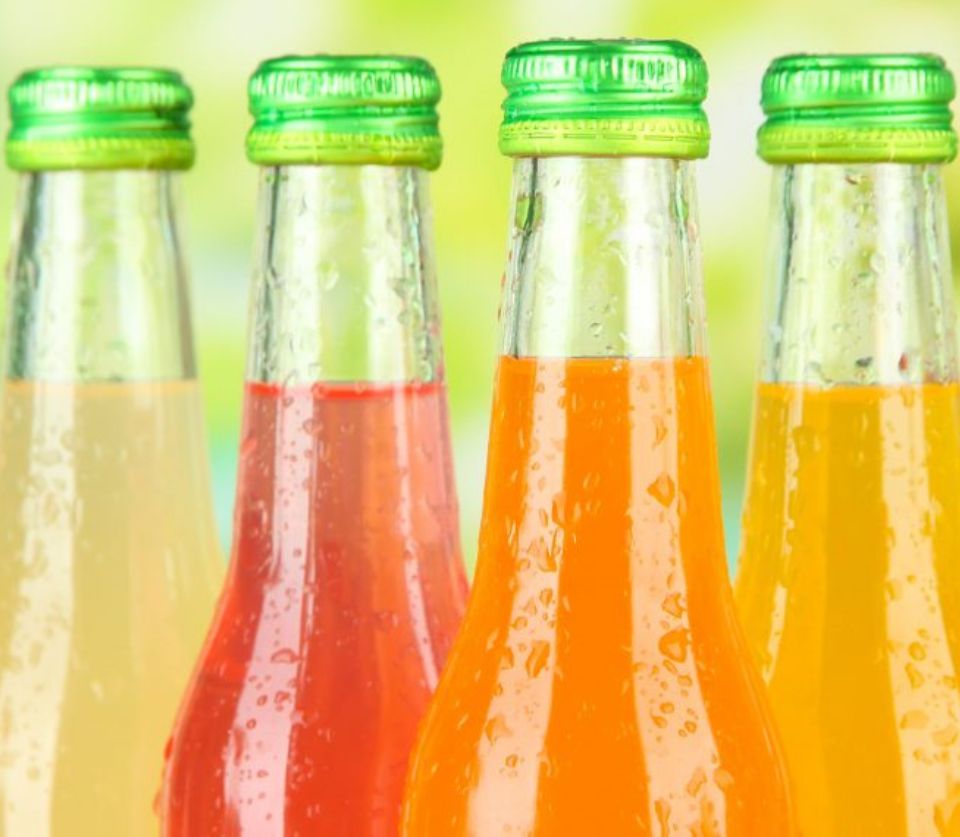
Fruit juices in glass bottles
Representative image
03

Carbon dioxide in carbonated drinks

Carbon dioxide, an essential ingredient of colas, fruit drinks, soda, mineral water and energy drinks, can carry impurities that spoil the colour, odour and taste of the drink, depending on how it is sourced. Hydrogen sulphide (H₂S) in particular leaves an unbearable odour in the product.

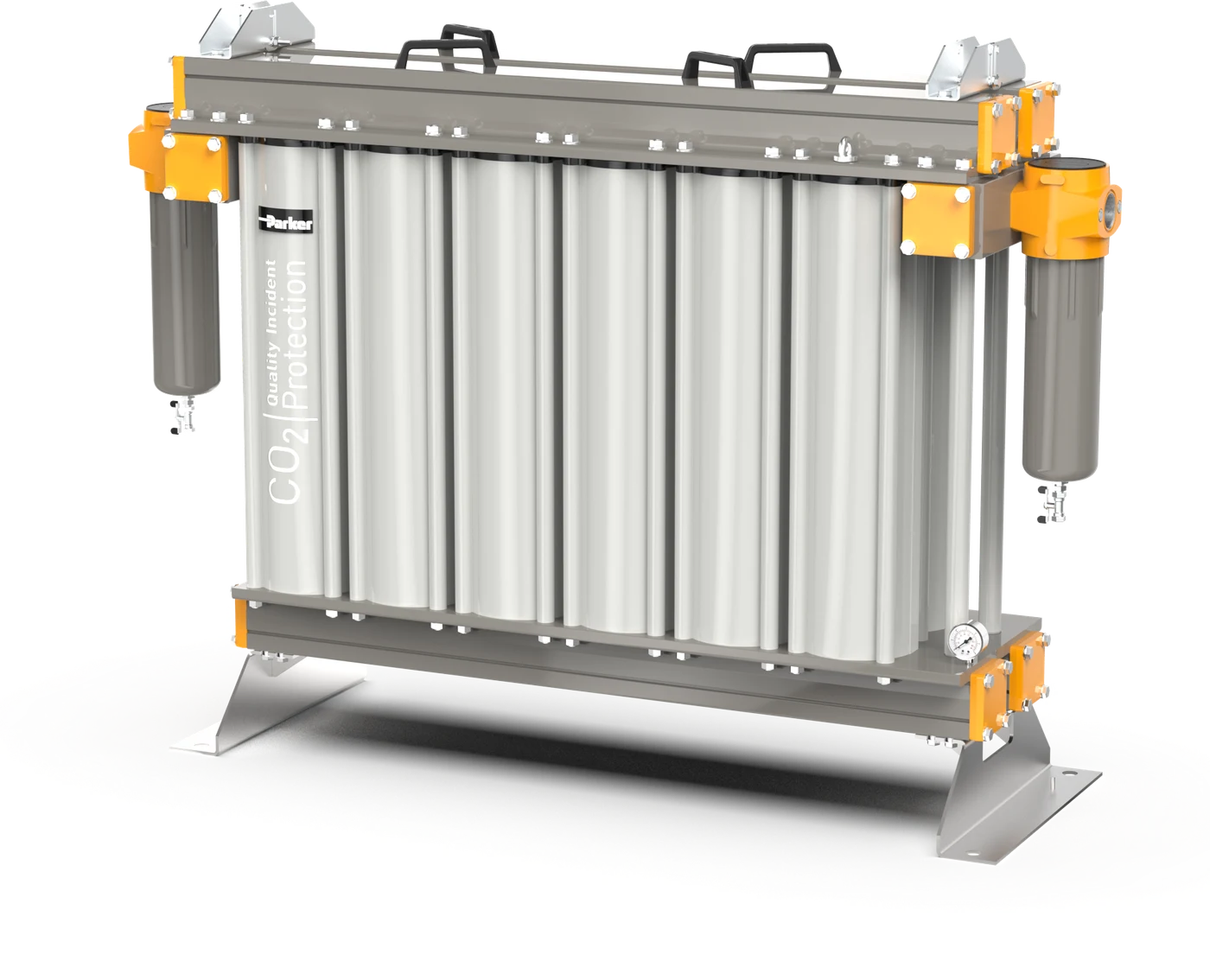
Liquid CO₂ delivered by tanker turns into gas at the evaporator outlet. The multi-stage CO₂ purifier is used at this point; after passing a 0.2 micron sterile filter before the carbonator, the gas can be dosed into the product.

Gas pressure · evaporator outlet
15–24 bar
PCO₂ flow · 24 bar(g)
181 – 4,354 kg/h
Cartridge life
Up to 12 months

Products usedCarbon dioxide purification (PCO₂)

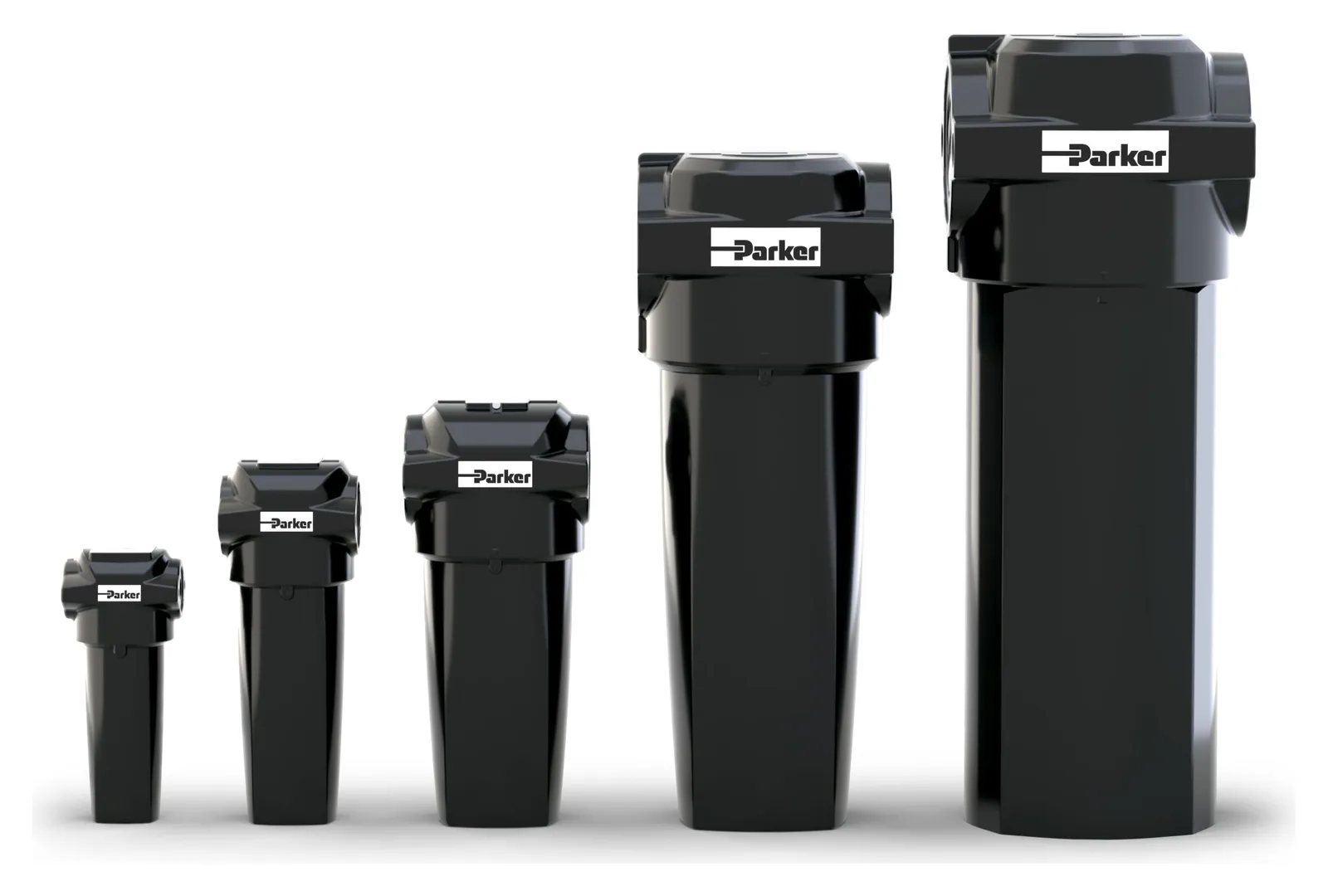
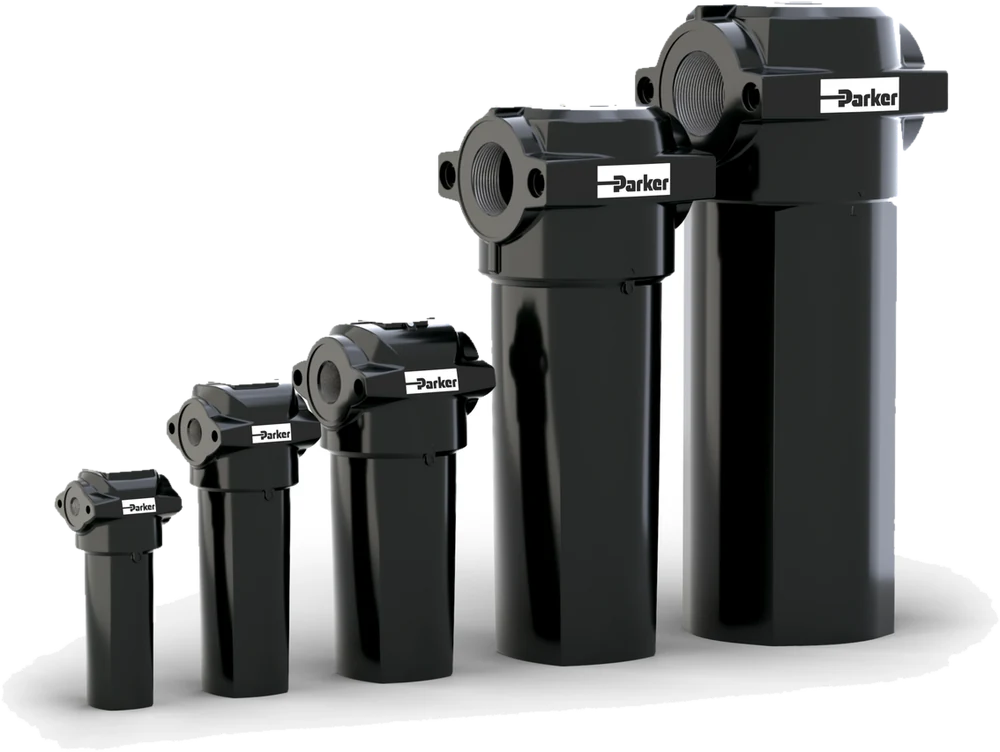
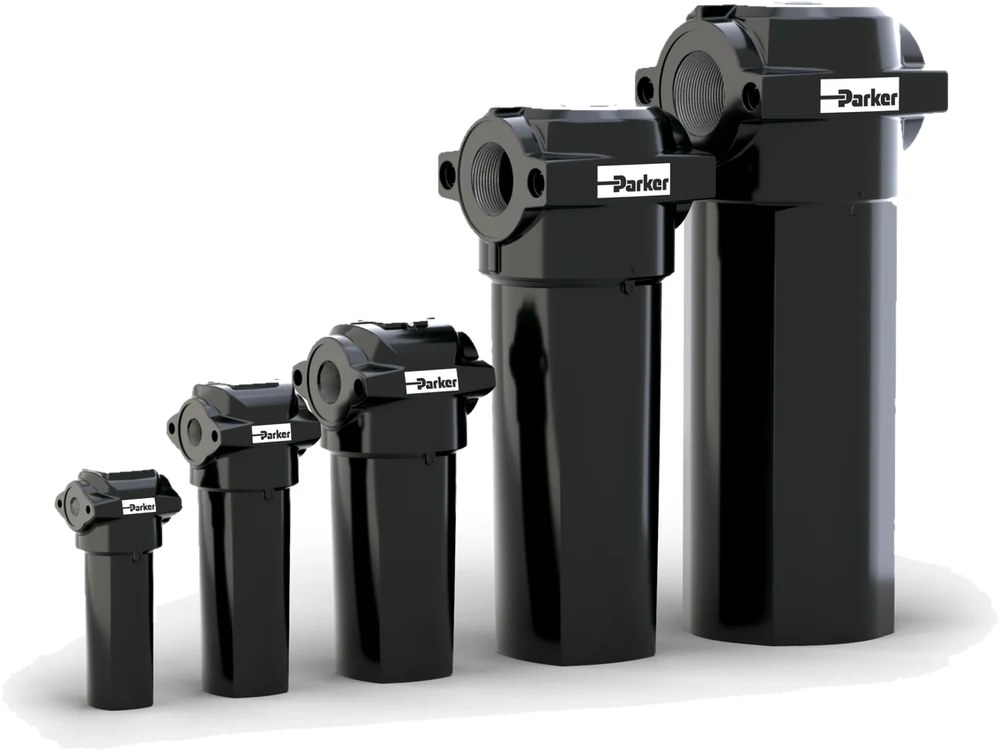
Parker OIL-X compressed air line filters in five sizes
Parker OIL-X · line filters
04

Compressed air in contact with the product

To make compressed air sterile, solid particles, water vapour and oil vapour must first be removed with a treatment system of line filters and a desiccant dryer; sterile filters should then be used at the last points before the application.

Regardless of the compressor type or whether it is oil-lubricated or oil-free, it is enough to sterilise compressed air only at the points where it contacts the product. For transferring products such as ayran without affecting their asepsis, consistency or viscosity, sterile compressed air is an easy, economical and reliable method.

Air quality · product contact
ISO 8573-1 Class 1.2.1
Sterile filter
0.2 µm membrane
Sampling kit
Up to 10.3 bar(g)

Products usedSterile air filters

Frequently asked questions

About food and beverage applications.

What class should compressed air in contact with the product be?

According to ISO 8573-1 and HACCP, compressed air in contact with the product must be brought to at least Class 1.2.1. Coalescing filters retain solid particles and oil/water aerosols down to 0.01 micron, activated carbon filters reduce the oil content to 0.003 mg/m³, and 0.2 micron membrane filters finally provide sterilisation.

Which gases are used in MAP?

MAP generally uses mixtures of pure nitrogen (N₂), carbon dioxide (CO₂), oxygen (O₂) and carbon monoxide (CO). For products such as sucuk, pastırma, cheese, fish and filo pastry, mixtures of 50–80% nitrogen and 50–20% carbon dioxide are common; the ratio depends on the product.

Can the gas mixture be prepared on site instead of buying cylinders?

Yes. Nitrogen produced by a PSA nitrogen generator is mixed in the required ratio with carbon dioxide fed to the gas mixer from a separate source. Cylinders are often preferred because they need no initial investment, but for companies using one cylinder a day or more, on-site generation with a nitrogen generator and gas mixer is far more advantageous.

Why is CO₂ for beverages purified?

Depending on how it is sourced (by-product, geothermal source, flue gas treatment), carbon dioxide can carry impurities that spoil the colour, odour and taste of the drink. Organisations such as ISBT, CGA and EIGA have set standards for CO₂ used in beverages; the PCO₂ purification system keeps the gas within these quality guidelines.

Does compressed air need to be sampled?

Quality management systems such as GMP, BRC, FDA, HACCP and ISO 22000 require compressed air to be sampled at regular intervals to control production quality. With a compressed air sampling kit, samples can be taken into Petri dishes at any point in the plant; the kit can be used on any line up to 10.3 bar(g).

Why is nitrogen blanketing used in tanks?

If atmospheric air enters the space left as a tank empties, its oxygen promotes oxidation and microbiological growth in the food. Feeding nitrogen into the tank headspace under pressure control keeps the oxygen level below critical limits.

Contact

Let’s plan your food and beverage application together.

Weekdays 08:30 – 18:00

Çerezler

Zorunlu çerezler sitenin çalışması için gereklidir. Analiz ve pazarlama çerezlerini yalnız izninizle kullanırız. Çerez Politikası